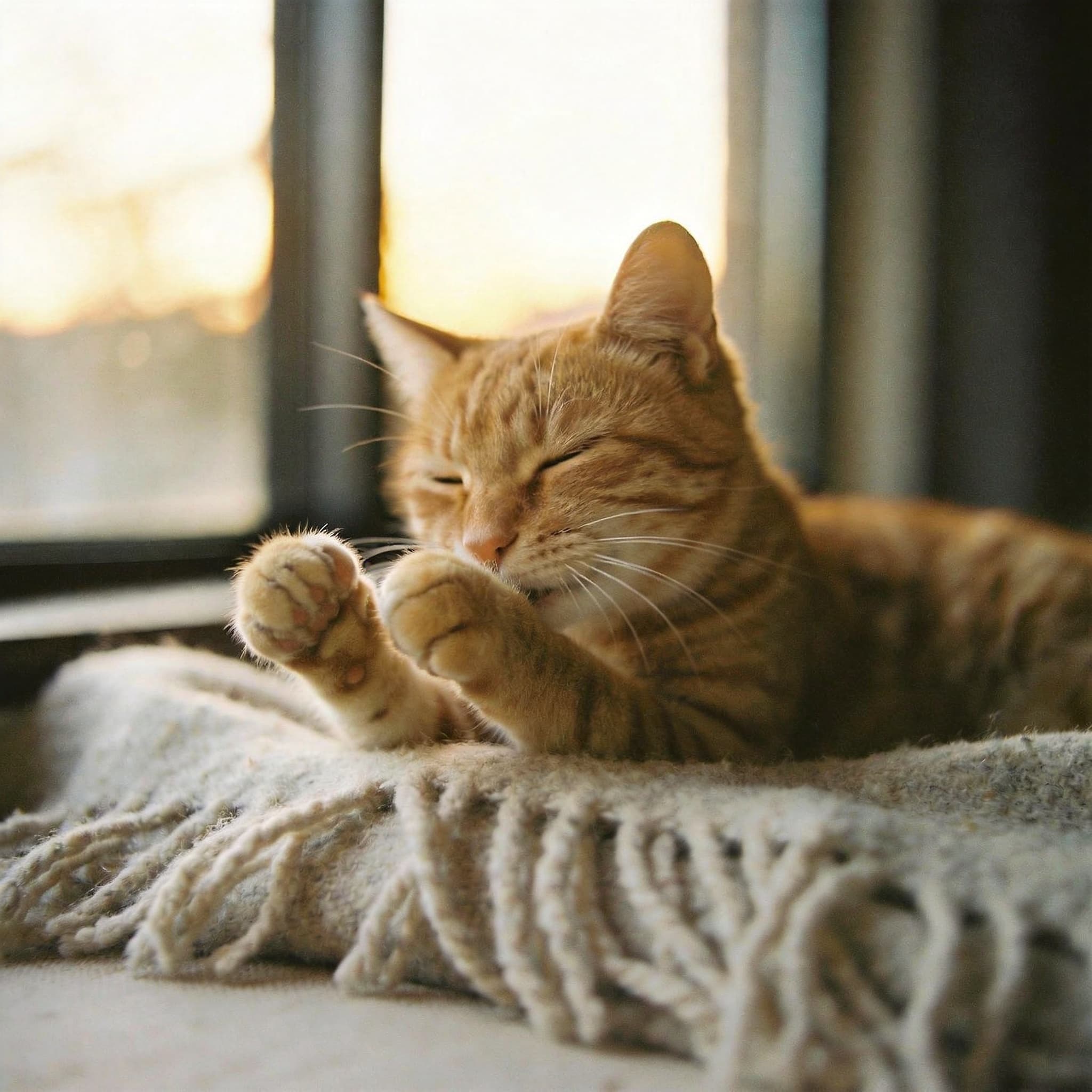
Why Do Cats Knead
Cats rhythmically press their front paws into soft surfaces — a behavior called kneading. Behind this gentle motion lies a warm and ancient secret.
If you share your home with a cat, you've surely seen this scene: your cat jumps onto your lap, half-closes their eyes, and begins rhythmically pressing their front paws — one, two, three… like they're kneading dough.
This behavior is called kneading, sometimes affectionately known as "making biscuits." It looks gentle and contented, but why do cats actually do it?
A habit from kittenhood
Kneading originates in infancy. Nursing kittens press their paws against their mother's belly to stimulate milk flow. This motion becomes deeply associated with fullness and safety, so even after a cat grows up, the instinct resurfaces whenever they feel particularly relaxed and secure.
"This is mine"
Cats have scent glands in their paw pads. When they knead, they're also leaving their scent on you, on the blanket, on the cushion. It's a gentle form of territorial marking — not a warning to others to stay away, but rather a way of saying "this person is mine, this place is safe."
Saying "I'm comfortable"
Cats only knead when they're truly relaxed. If your cat kneads on your lap, congratulations — they consider you their safest harbor. Some cats purr while kneading, which is the feline equivalent of pure contentment.
A special case for unspayed females
Intact females may also knead during heat cycles. In this case, it's hormone-driven rather than relaxation-driven. If your unspayed cat suddenly starts kneading more frequently, it might be worth paying attention to.
What if kneading hurts?
Some cats extend their claws while kneading, which can be uncomfortable. Never scold them for it — that would damage their trust. Instead, place a thick blanket on your lap, or gently guide their paws to a softer spot. Regular nail trimming also makes kneading much less prickly.
When to pay attention
Kneading itself is a normal, healthy behavior. But if a cat suddenly starts frantically kneading a specific spot (like their own belly), or shows signs of anxiety (dilated pupils, flattened ears, rapid tail swishing), they might be expressing distress. Check whether something in their environment has changed.
Next time your cat makes biscuits on your lap, just enjoy the moment — they're telling you, in the most primitive way possible: I feel safe with you.
Want to share your cat's story on this site? Send me an email with a photo and a short description. cells.jiang@gmail.com