Why Do Cats Purr
That low, rhythmic purr is one of the cat's most fascinating languages. But the message it conveys goes far beyond simply "I'm happy."
If you lean close to a relaxed cat and gently place your hand on its body, you'll feel a low vibration — like a tiny engine running. This is the purr, one of the cat's most unique sounds.
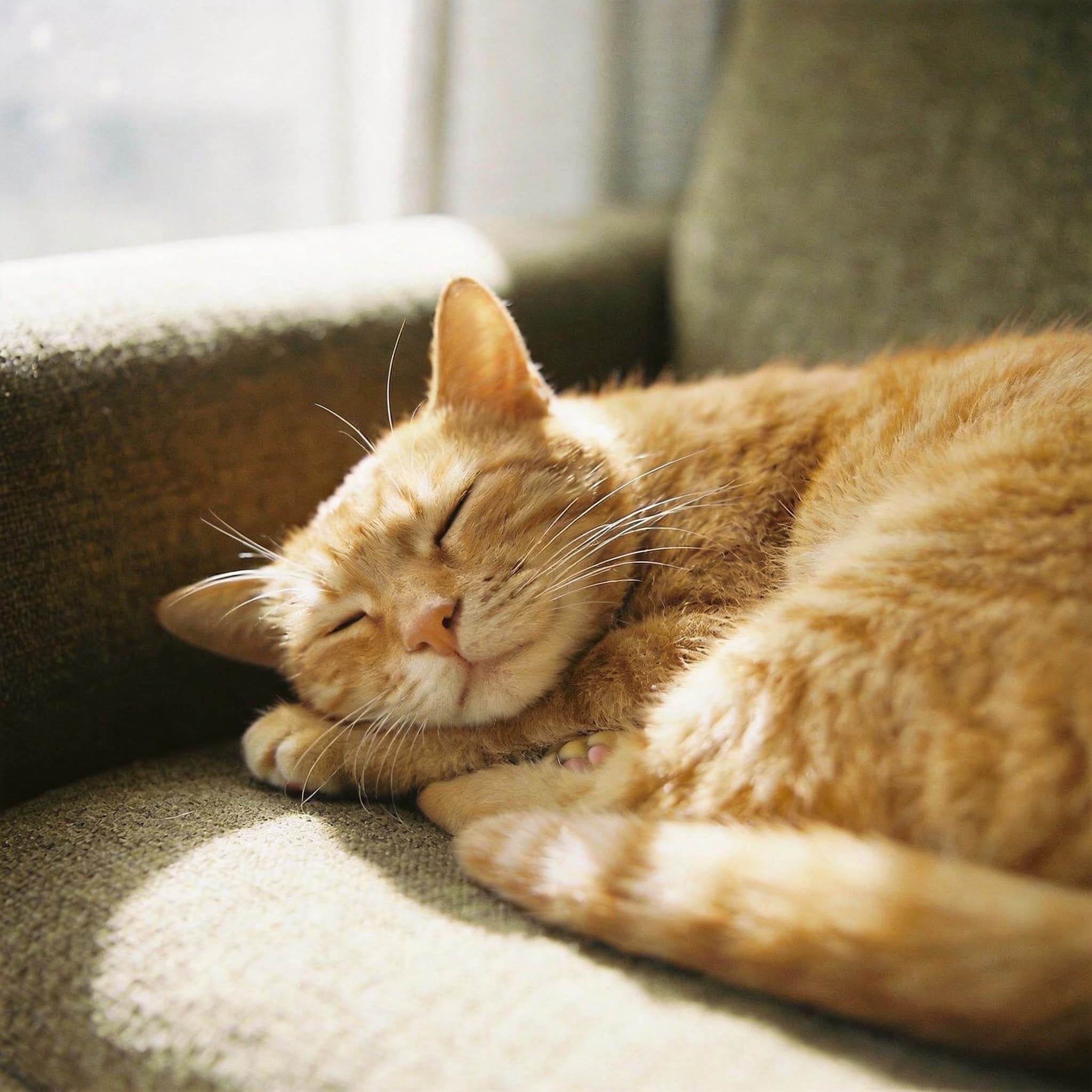
Many people think cats only purr when they're happy. Indeed, when you pet them, after they've eaten, or when they're lying comfortably in the sun, purring is most common. But the meaning of purring goes far beyond just "happiness."
How is a purr produced?
Scientists still haven't fully figured out the physiological mechanism of purring. The current consensus is that cats rapidly alternate contracting and relaxing the muscles around their larynx (near the vocal cords), creating vibrations during both inhalation and exhalation. This vibration frequency is remarkably stable, usually between 25 and 150 Hz, and cats can sustain this sound without opening their mouths.
Interestingly, big cats (lions, tigers) can only roar, not purr. And cats that can purr (domestic cats, bobcats, cougars) cannot roar. This is determined by anatomy — purrers and roarers belong to two different evolutionary branches.
The multiple meanings of purring
1. Contentment and relaxation — This is the most common scenario. When a cat feels safe, comfortable, and loved, purring is a form of self-soothing and an affirmation of their environment.
2. Request and communication — Some cats produce a special kind of purr when they want something, which researchers call a "solicitation purr." This purr embeds a high-frequency component similar to a baby's cry, making it hard for humans to ignore. If your cat uses an "urgent" purr when their bowl is empty, they're actually using an evolved technique to manipulate you.
3. Self-healing — Research has found that vibration frequencies of 25-150 Hz can promote bone growth, wound healing, and pain relief. Cats may purr when injured, sick, or even during labor, likely as a self-healing mechanism — using their own voice as physical therapy.
4. Stress and fear — Some cats purr when extremely stressed, frightened, or even near death. This sounds counterintuitive, but it's similar to humans taking deep breaths when nervous or self-soothing when crying — purring is a cat's way of trying to calm themselves in difficult situations.
Mother cats and newborn kittens
Purring plays an important role in mother-kitten communication. Newborn kittens begin purring within a few days of birth, mainly to tell their mother "I'm here, I'm fine." The mother cat also responds with purring as guidance and comfort. It's a vocal umbilical cord, letting blind kittens find their mother's location.
How to interpret a purr?
Listening alone isn't enough — observe the cat's overall state:
- Eyes half-closed, body relaxed, limbs extended → contentment - Eyes fixed on you, tail gently swaying, purring while walking toward the food bowl → request - Body tense, pupils dilated, ears flattened → possibly stress or pain - Eyes bright, actively rubbing against you, purr sounding light and cheerful → wanting interaction
Is purring good for you?
Yes. Studies show that cats' purring can lower human blood pressure, reduce stress, and even promote bone health. Nursing homes and care facilities are increasingly introducing cats precisely because this gentle vibration has healing effects on humans too.
Next time your cat purrs beside you, try placing your hand on them to feel it. They're having a conversation with you — sometimes saying "I'm happy," sometimes saying "please give me food," and sometimes just saying "I want to be with myself." Whatever the message, it's a gentle code cats have left for humans.
Want to share your cat's story on this site? Send me an email with a photo and a short description. cells.jiang@gmail.com